Showing posts with label Inspection. Show all posts

Thursday, March 7, 2019

Underground Oil Tank Locating and Property Sweeps in Westchester and Putnam County


Underground Oil Tank Locating and Property Sweeps in Westchester and Putnam County

     When purchasing (or selling) a property, In Westchester or Putnam County, it is imperative to know whether or not underground storage tanks (UST’s) are present. Even if a property is currently heated by natural gas, propane, above ground oil tank or current underground tank, it is important to know what other types of oil storage have previously existed. In most cases homes in Westchester and Putnam have been heated by oil  at one point since being built.  This is especially true in houses built prior to 1970 (or in rural areas). Although newer houses have also relied on oil for heating purposes. In some cases the current owners don't even know whether a tank exists.  For example, A house built in the 1920's most likely used coal  for heat then oil and then natural gas. A home from the 30's-80's may have had heating oil then natural gas or electric.

     In Westchester and Putnam County, many Villages, Towns and Cities did not require municipal permits to install or remove tanks. This lead to many tanks be improperly abandoned.  Now most municipalities require permits and inspections for the removal and installation of oil tanks.  Municipal involvement is designed to protect the home owner to ensure the proper disposal and documentation takes place 

Ground Penetrating Radar (GPR) is one of the most accurate tools used in determining if underground heating oil tanks exist at a property. Another technology is Electromagnetic Detection (ED).  Barrier Contracting uses both of these technologies to identify and locate any previous and in use underground heating oil tanks or associated piping

Ground Penetrating Radar uses radio signals to determine the characteristics of what lays underground. These signals can identify tanks, piping and various other materials beneath the surface without excavation.

Electromagnetic Detection involves connecting a transmitter to induce radio frequency to old oil lines and using a handheld device to trace and follow them. This technology can help determine if an underground oil tank exists or has existed.


Wednesday, July 29, 2015

Oil Tank Testing

Whether you are buying or selling a house, it is important to know if the oil tank has or is leaking. If removal is not an option we recommend testing the oil tank and the soils around it.

    One of the most common misconceptions about oil tank testing is that is done with pressure. In fact, the opposite is done. When a tester performs a tank test he puts your tank under 3 pounds of vacuum and places a microphone in your tank. The down side is there are many reasons a tank can FAIL a tank test, causing a spill number to be created.

      Sometimes the 3 pounds isn't enough to pull air through holes in the bottom of leaky tanks and other times the tank may fail due to a piping issue. For more information http://barrier.com/failedtanktest.html

      We advise our clients; buyers, sellers and home owners to replace the underground storage tank with an above ground heating oil tank.  Especially when it is an older tank.  At least you will have a new tank afterwards.

     Another way is to test the soil around the tank. This is called a subsurface investigation or tank assessment.  This investigation tests the soil and/or water around your oil tank.  It allows you to know whether the soil/water around the tank has been impacted.

     In the end, any single wall underground home heating oil tank should be replaced with an above ground oil tank.  Even if the tank passes a tank test or subsurface analysis.

Sunday, February 15, 2015

Helpful tips for buying a home with oil heat.

   When purchasing a home, it is important to know whether the home has or has had an oil tank.  If a “petroleum release” has occurred, it is the responsibility of the property owner to pay for all costs associated with the remediation of the contamination.  As a buyer there are a few things you can do to determine the condition of the tank and the soil around it.  

·       Request any paper work from the town, city or village detailing that the work was done to code.
·       
         Determine if there is or was an oil tank
o   Site visit to perform a field assessment
o   Tile Probe Area Of Concern (AOC)
o   Use Ground Penetrating Radar (GPR)

·       SoilTesting
o   Once the Area Of Concern (AOC) is established, Use soil probing technology to  insert 3 probes to a depth of 6-9 feet
o   Inspect the soil
§  Send the soil to the lab for analysis of Semi-Volatile Organic Compounds (SVOC’s) and Volatile Organic Compounds
o   Compare Lab analytics with the New York State Department of Environmental Conservation Standards
·       
          TankTesting
o   When a tank is found, a NYS licensed tank tester, applies a vacuum to the tank along with an acoustical test.

    The best way to know for sure is to remove the tank prior to closing. Removing the oil tank prior to closing not only shows the buyer you are serious but also relieves you of future remediation costs. 
Old oil tanks can be a costly liability if they leak.  Oil tanks that had previously been decommissioned can also leak if not done properly.

  Some or most new home owner insurance policies do not cover oil tanks and the costs associated with heating oil contamination. This is why it is important to know the condition of the tank and the soil around the tank.  For More information visit www.barrier.com or Call (914)760-2090

Oiltank removal, Consulting, Tank testing, Soil testing

Wednesday, April 16, 2014

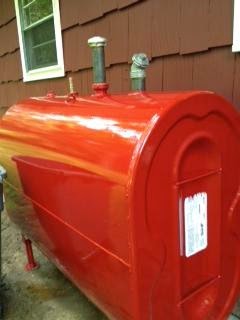
Above Ground Oil Tank Inspection

Above Ground Oil Tanks require very little maintenance. However, it is very important to inspect your tank

It is important for the homeowner to understand
Painted 275 Gallon Above Ground Oil Tank
www.barrier.com
that the oil tank is their property and their responsibility. The tank owner should ensure that it is properly maintained. Proper tank maintenance should include, but is not limited to, the following:

· Subscribing to a maintenance program performed by a heating oil  system licensed service technician;

· Visually inspecting the tank(s) at least Twice a year. Careful visual inspection will uncover traces of oil on the tank surface;

· Asking a service technician to check, at least once a year, for the presence of water inside the tank and to remove it;

· Immediately correct an unstable foundation or when the tank is likely to topple. The services of a licensed installer, Barrier Contracting, should be used;

· Maintaining the tank’s exterior surface, at least once per year, by: 

       1. Gently brushing the rusted areas on the tank’s exterior with sandpaper;

       2. Cleaning the sanded surface; and

       3. Applying a coat of rust proof metallic paint (readily available at
           any hardware store). If needed, Barrier Contracting can provide paint. 

Maintaining the tank’s exterior surface is a good practice and the
application of touch-up paint will not void the warranty of the tank

· Maintaining the tank liquid level as high as possible during the 
summer months to limit water condensation within the tank.

Thursday, April 10, 2014

Oil Tank Removal in Westchester and Putnam, NY


 Barrier Contracting has trained professionals to help guide you through the oil tank removal process.  If your tank is above or below ground we have the expertise to provide excellent service.  We remove 275, 550,1000 up to 16,000 gallon oil tanks. If you are buying or selling a home, we recommend any underground fuel oil tanks be removed before the contracts are signed.  
      Oil Tanks over 25 years old can have a 20% failure rate. If you wait until you have a leaky tank it can be a disaster. If your storage tank is leaking we can provide you full service environmental remediation including soil removal, water disposal, soil testing, etc.  We handle inspections, sampling, closure reports and meet with local inspectors to make sure any issue is resolved.
 
    
    At Barrier Contracting, we provide underground oil tank removal for homes and businesses. We can bring our excavator machine to your location and remove the tank safely and efficiently.  We also provide Oil tank removal by hand, which can be extremely dangerous if not done properly. Our specialists are experienced and knowledgeable about the industry’s best practices, and provide excellent service every time. Trust Barrier Contracting for all your needs, from fuel oil storage tank installation to oil tank removal.
p7292481.jpgthree2ktanks.JPG550dualmachine.JPG

Information on Failed Oil Tank Tests in New York

Did you know failing a tank test creates a NYS Spill Number?

     If you have failed an oil tank test we recommend replacing the oil tank with an above ground oil tank.  This creates is the best value for the money you will spend.

     When an oil tank fails a tank test, also know as pressure test but is actually a vacuum and acoustical test, the tester must notify the New York State Department of Environmental Conservation (NYSDEC).  Once notified, the NYSDEC will assign your property a Spill Number. A Spill Number is like a case number used to reference your property and the actions taken.  Once the Spill Number is assigned an investigation is required to find out if any soil or groundwater has been impacted and if further action is required.

     This can involve excavating to the top of the tank and checking the fittings, connections and piping.  It can also lead to removing the oil tank, impacted soil, taking samples and sending the NYS DEC documentation of the actions taken.
 
If the breach is in the vent or fill, the top of the tank needs to be exposed and the piping replaced then a retest must be preformed.  If this passes the report needs to be sent to the NYSDEC.

If the breach is in the oil lines, the top of the tank needs to be exposed then the oil lines need to be exposed and replaced. Finally the tank needs to be retested.

If the breach is not found after replacing the vent, fill, oil lines and failing the second test the tank needs to be removed.   After the tank is removed the pit needs to be inspected and sampled. If the samples come back with contamination a remediation must be done.

In the end any single wall underground home heating oil tank should be replaced with an above ground oil tank.  Even if the tank passes a tank test or subsurface analysis. For more information visit www.barrier.com or email waynejr@barrier.com